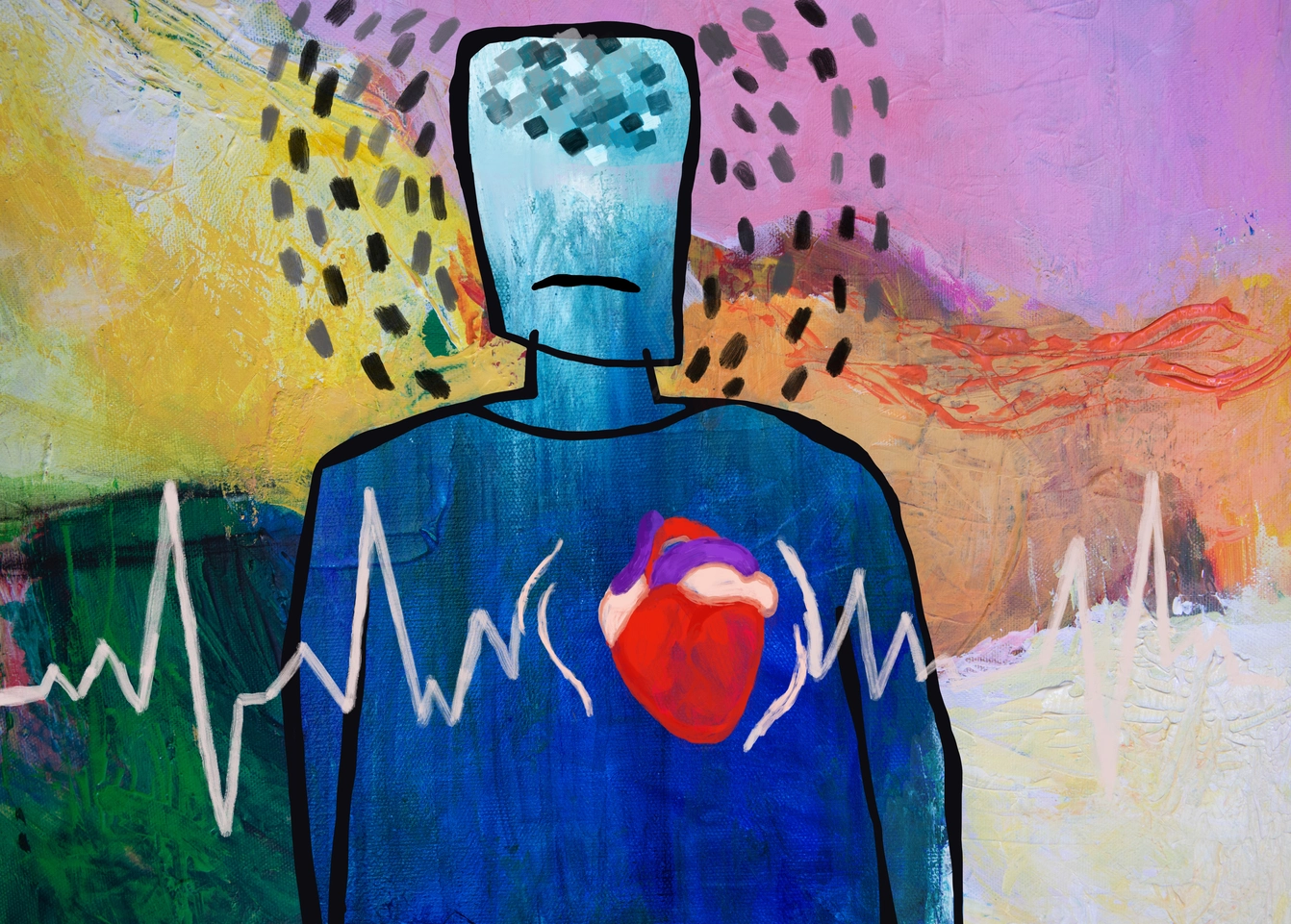

What It Means to be Truly Felt.
I have always paid close attention to the people I love. I ask questions-a lot of them. I notice patterns. I remember small details that probably weren’t even important to them. I don’t do this because I am nosy, but because it really matters to me that the people in my life feel seen, loved and not alone.
For the longest time, I assumed that this was simply how connection worked. That curiosity was naturally inherent in all. That wanting to understand someone’s inner world was a basic part of caring for them.
It took time, and a few quiet disappointments, for me to realize that this was not always the case.
I began to notice how differently people moved through relationships. How often connection chooses comfort over depth, and convenience over curiosity. I started to understand that what felt natural to me didn’t always feel natural to everyone else. Not because they lacked care, but because many people were navigating their own fears, habits, and emotional limits. I realized that seeing another person deeply requires a kind of patience and vulnerability that not everyone has learned how to practice. I realized that what I thought was instinctive in all relationships is, for many, something unfamiliar and even uncomfortable. My insightful daughter also shared “that some people are just hard-wired with the ability to be super humanly empathetic”. I agree.
A recent close family member crisis made this even clearer to me in ways I did not expect.
In the middle of fear, uncertainty, emotional exhaustion, and a super loud and busy hospital, I noticed how differently people showed up for one another. Some rushed in to “fix” the situation. Some avoided discomfort. Some meant well but did not know how to stay present. It was disheartening to see how rare it is for people to remain emotionally available when there are no answers to offer.
During that time, I found myself often physically alone. Some people visited, but no one stayed with any consistency. Sure, there were phone calls, text messages, and brief check-ins, yet the space around me felt incredibly empty.
Emotionally, I felt profoundly and unbearably alone.
I was carrying a heavy burden and felt that I was holding it entirely myself. What I longed for was a deeper presence. Conversations that did not just focus on updates, logistics, or the well-being of someone else, but made space for what I was carrying too. Conversations that felt steady, real, and willing to sit with me inside the emotional weight. Moments that made me feel like someone was willing to share that weight with me, not just acknowledge that it existed.
What made this harder to understand was that I was not entirely without contact. There were people around me. There were conversations. There were moments of connection. But I began to realize that closeness and presence are not the same thing. You can be physically near someone and still feel unseen. You can be spoken to and still feel alone in what you are carrying. What I was missing was not company, but companionship in the emotional sense.
Emotional support does not require physical closeness (but damn it does feel good when you have it). It requires attentiveness and consistency. It looks like someone remembering what you shared when you were struggling, not them sharing their struggles. It sounds like gentle follow-ups that are not rushed or performative. It is not about having the right words; it is about staying present long enough for another person to feel that their experience matters.
I also realized that emotionally showing up for someone sometimes means choosing their emotional needs over your own momentary comfort or distraction. It means pausing what you are doing, even briefly, to make space for what another person is carrying. Not because your own life is unimportant but because connection sometimes asks us to choose presence over convenience and fun.
It is a quiet way of saying, you matter enough for me to be “here” with you right now.
It made me think about how rarely we are taught how to accompany one another through difficulty.
There is a quiet loneliness that comes from offering attention, patience, and care, and not always feeling it returned in the same way. It is not dramatic. It does not announce itself. It feels like you’re being supported, but not quite understood. Like being surrounded, but still carrying things alone. It hurts.
I have spent a lot of time wondering why this kind of understanding feels so important to me. Why I want the people I love to feel less alone inside themselves. Why I hope, not so quietly at times, that someone will notice the parts that are not always easy to explain.
I think part of the answer is that I, along with so many others, do want our struggles recognized, but we also want more than that. We want our strength, our fear, and our uncertainty to be held by someone else, even if it’s just for a few moments.
We want the darker, quieter, and sometimes super weird parts of ourselves to be seen without judgment. There is something delightfully pure about being known in those places and still being handled with care. It reminds us that we do not have to edit ourselves in order to belong. In moments of crisis, understanding is not always what we need the most. Sometimes we just need someone willing to stay “nearby” while we are so scared. Someone who does not rush us forward or pull us away from what we are feeling.
Presence, even imperfect or remote presence, can be the difference between feeling alone and finding the strength to keep moving forward.
I have also learned that many people want to offer this, but don’t always know how. Vulnerability makes us uncomfortable. Silence feels awkward. Uncertainty feels threatening. So we fill the space with advice, humor, surface stuff, or distance; when what we really need is stillness.
I don’t think this makes anyone unkind or uncaring. I think it makes us human. Still, there is something deeply comforting about being met gently in our more fragile states. Knowing that someone is willing to sit with us when we do not yet have the language for what we are experiencing.
It has taken me a bit to write these thoughts down and where I am landing is that this desire is not about needing to be understood perfectly. It is more about wanting to feel less alone while being imperfectly understood.
Perhaps that is what most of us are really asking for in our relationships. Not to be fully known, but to be accompanied while we are still becoming.
And maybe that is what it means to be truly felt.





Ready when you are.
Whether you need a plan, an initiative, or a full marketing team, we're here to help you make it happen.
.avif)

0 Comments